STONEHENGE, ENGLAND
October 25, 2003
Click on any picture to see it larger
← Previous Pg | Next Pg →
 Oct 25, 2003 - Stonehenge
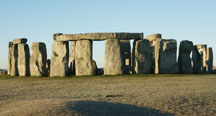
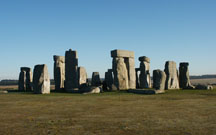
We got picked up Saturday morning at 5:30am for our tour to Stonehenge (it's in Salisbury, about 1.5 hours from London). It opens to the public at 9:30, but we get to go inside with the tour from 8:00am-9:00am and walk around the stones! Notice how the grass is a really light color? Well that is frost. It was damn cold.
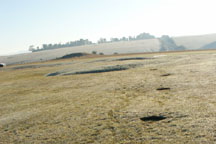 Stonehenge was built in three phases. The first stage was a circle of timbers surrounded by a ditch and bank. The ditch would have been dug by hand using animal bones, deer antlers which were used as pick-axes to loosen the underlying chalk and then the shoulder blades of oxen or cattle were used as shovels to clear away the stones. Excavations of the ditch have recovered antlers that were left behind and it was by testing their age through radio carbon dating they know that the first henge was built over 50 centuries ago, that is about 3,100 BC. That's where the mystery begins. There are also 56 holes now known as Aubrey Holes, named after the 17th century antiquarian, John Aubrey, who found them in about 1666. These holes were dug to hold wooden posts, just as holes were dug later to hold the stone pillars that are there now (the pic on the right are the wooden post holes).
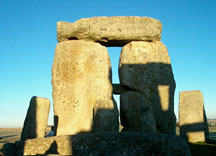
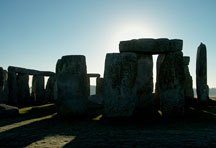
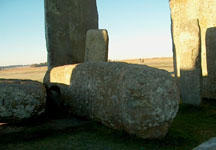 Then about 4,000 years ago - 2,100 BC, it was rebuilt. This time in stone, bluestones were used which are the smaller stones that you can see in the pictures. These came from the Prescelli Mountains in Pembroke, South Wales 245 miles (380kms), dragged down to the sea, floated on huge rafts, brought up the River Avon, finally overland to where they are today. It was an amazing feat when you consider that each stone weighs about five tons.
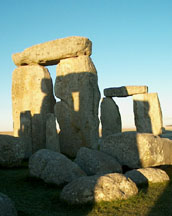
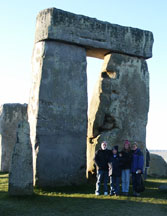
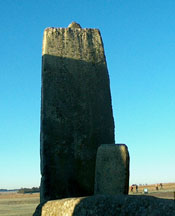 Before the second phase of Stonehenge was complete work stopped and there was a period of abandonment. Then began a new bigger, even better Stonehenge, the one that we know today. Just under 4,000 years ago, about 2,000 BC, the third and final stage of what we see today. The bluestones were dug up and rearranged and this time even bigger stones were brought in from the Marlborough Downs, 20 miles (32 kms). These giant sandstones or Sarsen stones, as they are now called were hammered to size using balls of stone known as 'mauls'. Even today you can see the drag marks. Each pair of stones was heaved upright and linked on the top by the lintels. To get the lintels to stay in place, the first wood working techniques were used. They made joints in stone, linking the lintels in a circular manner using a tongue and groove joint, and subsequently the upright and lintel with a ball and socket joint or mortice and tenon. This was all designed on the alignment of the rising of the mid summer sun.
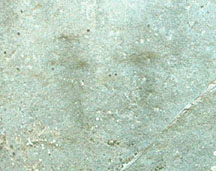
 Here is the first 'graffti' they have found on stonehenge. You have to look closely , but they are dark figures of a knife and an axe.
It's an incredible place.
On another stone near this Christopher Wren (1632-1723) carved his name. He's the guy who designed St. Paul's Cathedral in London (and many other buildings).
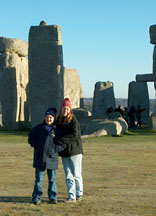
Yep, end of the tour and we're still freezing!
One more page for this trip...