








| | |
|
| |
| | |
 |  |  |
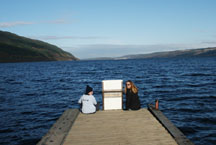
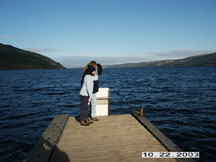
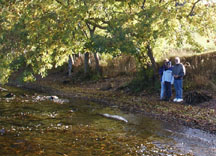 | How long does it get to take a kid to move over for a picture... On the banks of the Loch where most sightings of Nessie have been reported and still no sign of her... | |
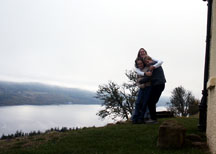
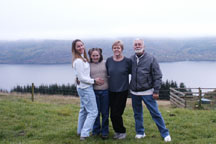 Oct 23, 2003 - We left the cute farmhouse to fly to London for our last few days (we're doing our planes, trains and automobile trip). Group photos outside the house, we got cold waiting for the old guy!
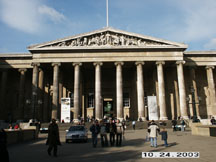
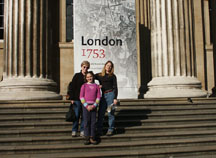 Oct 23-24 - We got into London in the afternoon, checked into our cute little Harlingford Hotel (we've stayed there each time). They have re-decorated since we were here last which means they slapped some new paint up, changed the color of the bedspreads and curtains and tossed some new throw pillows on the bed and charge a little more. We saw the play Mamma Mia that night at the Prince Edward Theater and it was really good, it's a musical with Abba songs (I didn't know that I knew that many Abba songs).
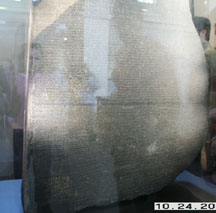 The Museum is HUGE! You could spend days there and not see it all. Mackenzie is studying Mesopotamia in her Ancient Civilizations class so we went to that area and the Egypt area with the mummies and stuff. Then we headed down to see the Rosetta Stone (look closely at the left side of the stone, you can see Mackenzie in the reflection)!